Globalkulture Organisation in association with Centre for Indian Knowledge Systems, Garden City University
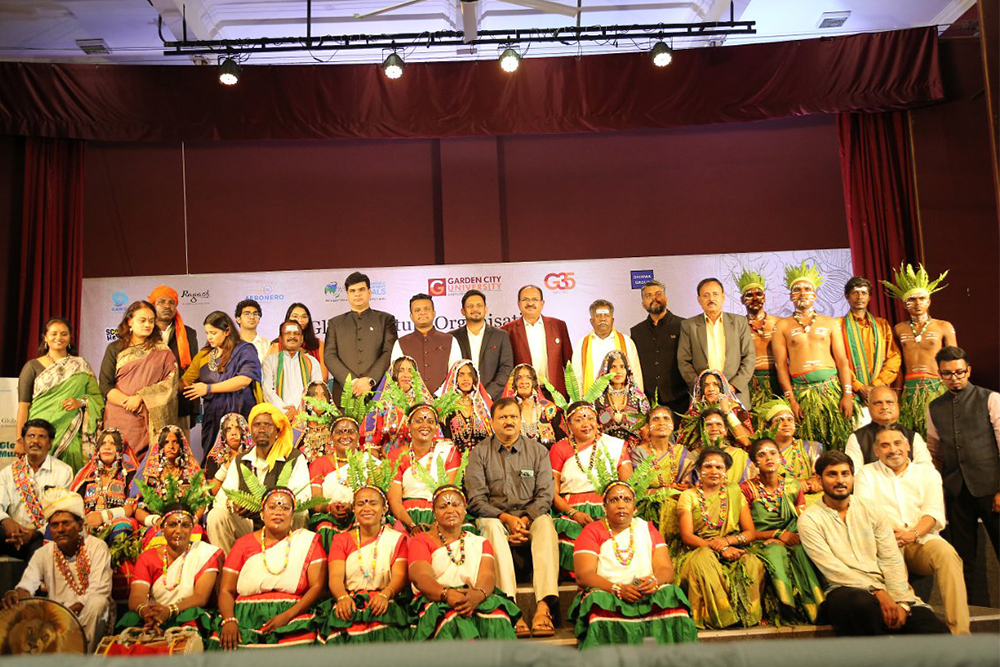
Objectives of the Event: The celebration of World Indigenous Day 2026 aimed to recognize, honor, and promote the rich cultural heritage, traditions, and artistic expressions of Karnataka’s indigenous communities, particularly the Sholiga, Lambani, and Siddi tribal groups. The event sought to create a meaningful platform for indigenous artists to showcase their traditional music, dance, and cultural practices before an audience comprising distinguished scholars, academic leaders, faculty members, and undergraduate students. It aimed to foster intercultural dialogue and appreciation by facilitating direct engagement between indigenous communities and the academic community. The programme also intended to raise awareness about the historical contributions, contemporary challenges, and cultural resilience of tribal communities. By bringing indigenous performers into a university setting, the event sought to encourage respect for cultural diversity, support the preservation of intangible cultural heritage, and strengthen the institution’s commitment to inclusivity, social responsibility, and the celebration of India’s diverse cultural traditions.
Learning Outcome: At the end of the event, participants were able to develop a deeper understanding of the cultural traditions, artistic practices, and historical significance of the Sholiga, Lambani, and Siddi communities of Karnataka. Students and attendees gained first-hand exposure to indigenous forms of music, dance, storytelling, and community expression, enabling them to appreciate the diversity of India’s cultural landscape. The event enhanced awareness of the importance of preserving indigenous knowledge systems and intangible cultural heritage in a rapidly changing world. Participants were able to critically reflect on issues related to identity, cultural representation, inclusion, and social justice affecting indigenous populations. Through interactions with performers and community representatives, attendees cultivated greater empathy, respect, and sensitivity towards indigenous cultures. The programme encouraged interdisciplinary learning by connecting cultural studies, history, anthropology, and social sciences, while fostering a commitment to cultural preservation and community engagement.