

College in 2026 is a whole different ballgame. Most students figure out pretty fast that waving a degree around won’t automatically land a job. Instead, hiring managers want “Day Zero” problem-solvers who can jump into a lab and run tests without hand-holding. That is exactly where Garden City University’s medicinal plant research steps in, turning dusty textbook theory into messy, practical benchwork.
Set right in Bengaluru’s busy research belt, GCU takes a refreshingly direct approach: Learn it, do it, live it. Rather than keeping students locked in lecture halls, the campus turns routine botany into an active trial ground for young scientists.
Table of Contents
ToggleHands-On Plant Research Beats Staring at Slides
Sitting through dry lectures often feels like watching someone else swim instead of diving into the pool yourself. GCU flips that dynamic completely. By treating its Hoskote campus as an open-air laboratory, the faculty moves botanical science straight into the dirt.
Whether you lean toward biotech or environmental policy, the emphasis stays on the applied side of things. In other words, you discover how a raw biological concept actually transforms into a viable, off-the-shelf product.
1. Building Skills That Software Can’t Automate
To land competitive biotech offers, graduates need specialized lab skills that AI simply cannot copy. Because of that, GCU zeroes in on practical niches that traditional colleges usually ignore:
Tissue culture cleanrooms run on precision. Students spend hours propagating vanilla and rare orchids, which is not just another graded lab exercise. Rather, it opens immediate doors into commercial export markets and pharmaceutical manufacturing.
At the same time, managing dialed-in lighting, humidity, and nutrient cycles for microgreens gives students a direct bridge into the agri-tech sector. In addition, they learn how to manage tight commercial harvest windows. Undergrads also convert daily campus organic scraps into potent bio-fertilizers. Consequently, they pick up real circular economy techniques that green consulting firms hunt for every hiring cycle.
2. Tying Lab Work Directly to National Goals
Research at GCU does not sit on a shelf collecting dust. Instead, it hooks straight into active national programs.
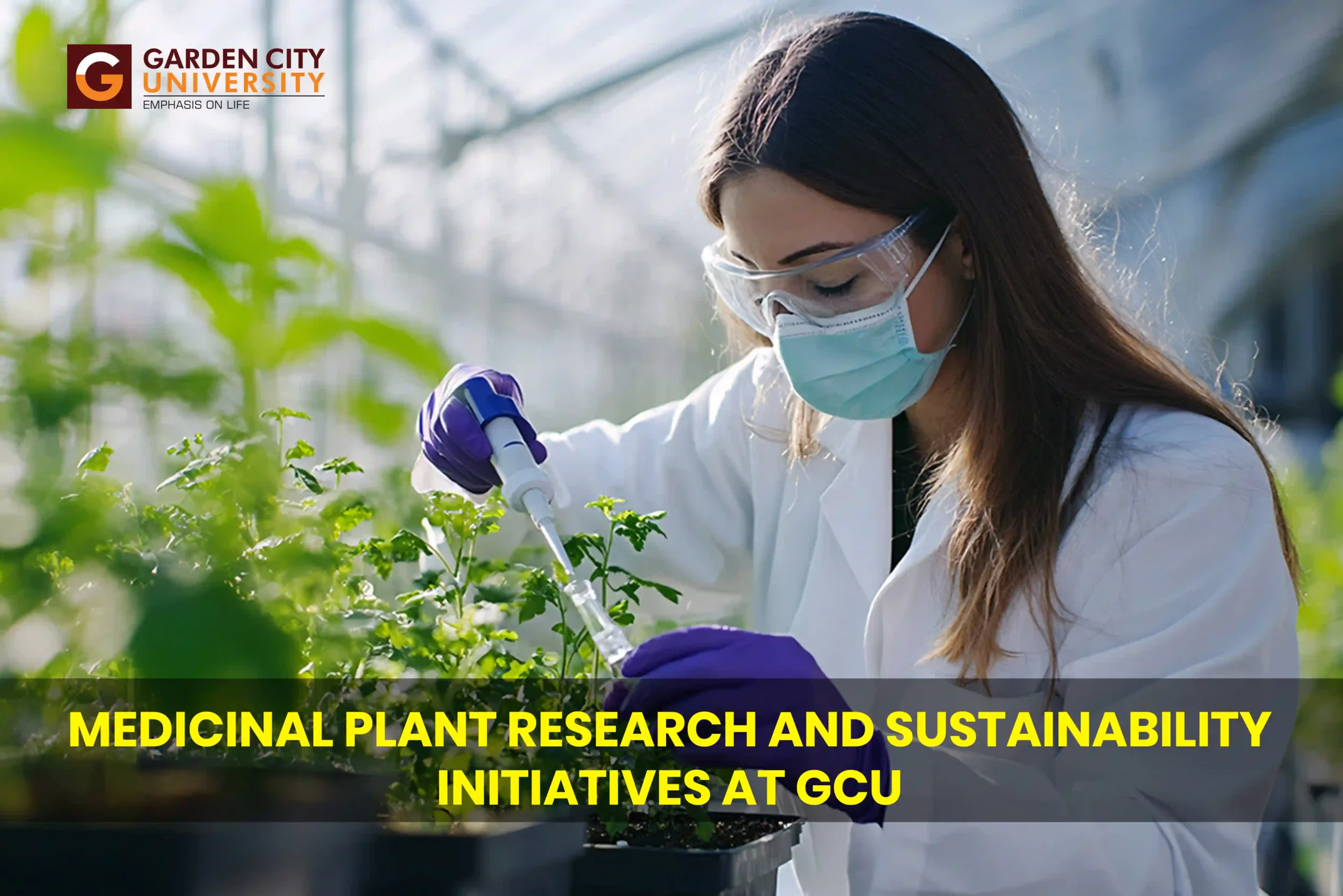
Guided by experienced researchers like Dr. Madhu Malleshappa, students help coordinate the Ashwagandha National Campaign with the Ministry of Ayush. Because this is an authentic national initiative, students handle serious, real-world tasks daily. They standardize sustainable farming practices for medicinal crops across nearby partner farms. Lab teams also analyze crops like Shatavari to confirm active botanical compounds for pharma buyers. In turn, students watch how a raw seedling in a Hoskote greenhouse turns into a certified health product in a pharmacy.
3. Hoskote: An Outdoor Eco-Research Hub
The Hoskote campus features an expansive 10-acre Miyawaki forest. In fact, it ranks among the largest dense urban rewilding projects on any university grounds in India.
For Life Science researchers, the dense canopy functions as an outdoor testbed to measure real-time carbon storage and soil microbiology. Meanwhile, it gives sustainability leads a living case study on how to build self-sustaining green belts inside a rapidly expanding city like Bengaluru.
4. Running Budgets Through Club Mela
Real-world training does not stop at the greenhouse door. Through Club Mela, GCU runs student clubs on an event-based funding model that functions just like a startup incubator. When you organize a technical workshop or an eco-exhibit, you manage actual budgets and cross-functional teams. After all, big corporate employers like KPMG, Deloitte, and Goldman Sachs look for that exact brand of hands-on grit.
FAQ
Typically, students who have completed 10+2 with a focus on science (PCB/M) are eligible. GCU prioritizes candidates who show a “hands-on” aptitude for field research and lab work over simple rote memorization.
Yes. Major research campaigns at GCU, particularly those involving medicinal plants, are supported by national bodies like the Ministry of Ayush, giving your portfolio national credibility.
Graduates from the School of Sciences are regularly recruited by top-tier firms in the pharmaceutical, agri-tech, and sustainability sectors. The practical experience with orchids and microgreens often leads to roles in high-value niche companies.
Absolutely. The GCU Incubation Centre and IPR Cell provide the logistical and legal support required for students to turn their research findings into registered commercial ventures.
Conclusion
In 2026, a marksheet is just a ticket to enter the room; your projects are what help you keep your seat. The focus on Medicinal Plant Research and Sustainability Initiatives at GCU ensures that you don’t just “graduate”—you “launch.”
By mixing traditional plant wisdom with modern analytical science, GCU prepares you to be a specialist who can look at a global challenge and find a local, sustainable solution. If you’re ready to trade the PowerPoint for the greenhouse, exploring the programs at Garden City University is the most strategic career move you can make today.