
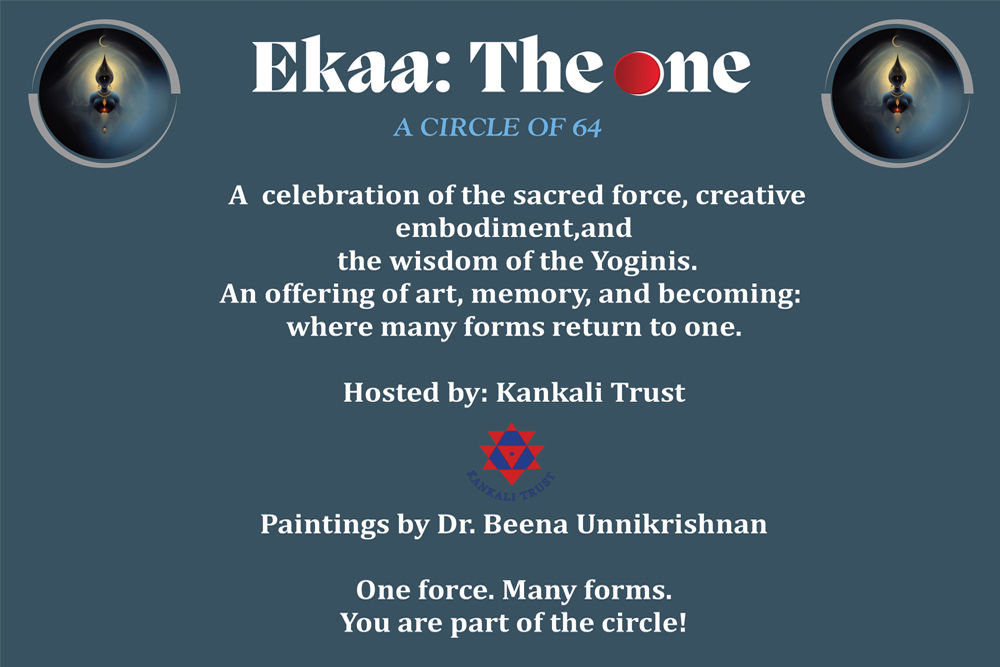
National Travelling Exhibition at Venkatappa Art Gallery, Bengaluru
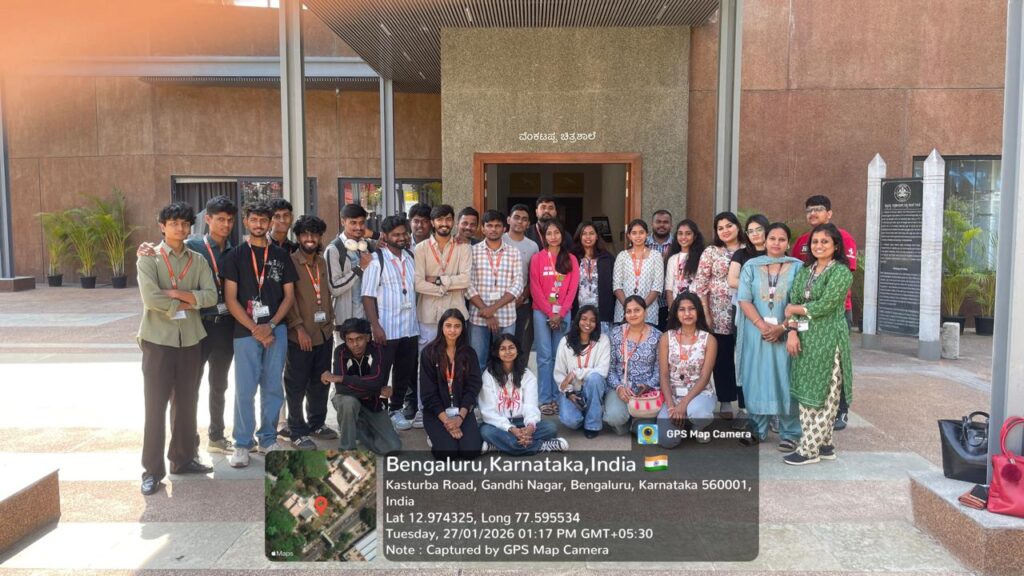
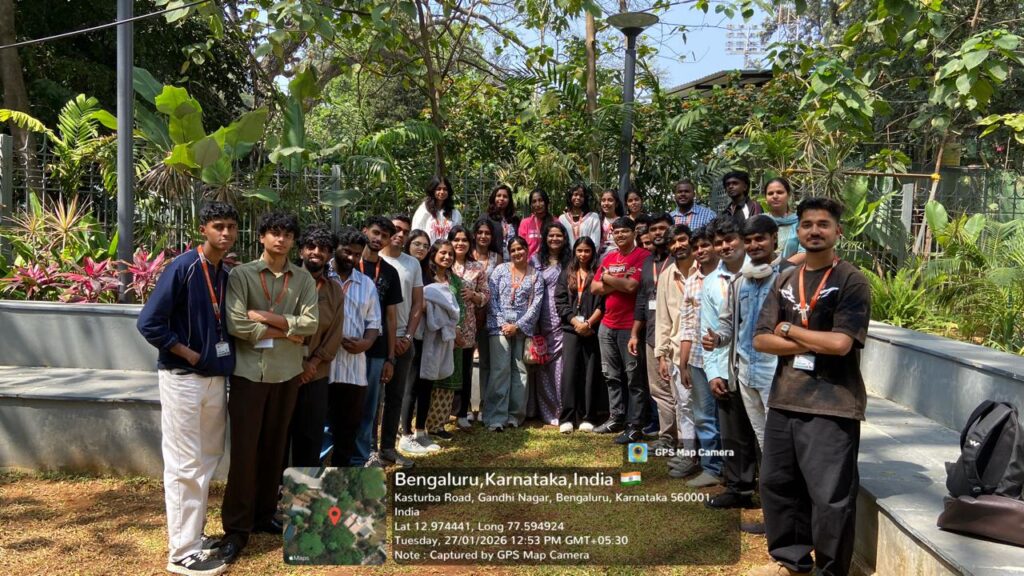
An educational visit was organized to the Venkatappa Art Gallery, Bengaluru, for students of the School of Media Studies and the School of Professional Studies, Department of Fashion and Apparel Design, accompanied by three faculty members. A total of 28 students participated in the visit to experience Ekaa – The One: The 64 Yoginis, a nationally acclaimed travelling exhibition by renowned contemporary artist Dr. Beena Unnikrishnan.
The visit aimed to enhance students’ understanding of art as cultural communication, visual storytelling, symbolic representation, and the relevance of traditional knowledge systems within contemporary creative practice.
Conceptual Framework: The Sixty-Four Yoginis
The exhibition is inspired by the ancient Indian tantric tradition of the Sixty-Four Yoginis, a powerful and less commonly represented aspect of India’s spiritual and artistic heritage. Historically, Yoginis are understood as collective manifestations of Shakti, the divine feminine principle representing energy, creativity, transformation, protection, wisdom, and transcendence.
Between the 9th and 12th centuries CE, Yoginis were worshipped in circular, open-air temples, known today as Chausath Yogini Temples, located across regions such as Odisha, Madhya Pradesh, and Tamil Nadu. These temples were architecturally and philosophically distinct, emphasizing:
• Non-hierarchical spiritual systems
• Collective feminine power
• Cosmic unity and cyclic continuity
The number 64 holds deep tantric significance, symbolizing completeness, wholeness, and the full spectrum of consciousness, often associated with the 64 arts (kalas), 64 yogic powers (siddhis), and multidimensional feminine energies.
The 64 Yogini Paintings: Artistic Interpretation
Dr. Beena Unnikrishnan’s 64 Yogini paintings represent a contemporary reimagining of this ancient tradition. Rather than replicating historical sculptural forms or ritual iconography, the artist approaches the Yoginis as energetic archetypes and psychological forces relevant to modern life.
Each painting functions as an independent yet interconnected visual narrative, collectively forming a symbolic mandala of feminine consciousness.
Key Artistic Characteristics
• Expressive abstraction over literal figuration
• Layered symbolism referencing elemental forces, intuition, balance, and transformation
• Organic forms and fluid compositions suggesting movement, rhythm, and inner dynamism
• Intuitive colour palettes evoking emotional and spiritual states rather than representational realism
Through this approach, the Yoginis are presented not as distant mythological figures, but as living energies that resonate with contemporary experiences of identity, gender, emotion, and inner awareness.
Thematic Dimensions of the Yogini Series
The 64 paintings collectively explore several interrelated themes:
a. Feminine Power and Diversity
Each Yogini embodies a distinct aspect of Shakti — nurturing, fierce, contemplative, transformative, protective, or introspective — highlighting the plurality of feminine strength rather than a singular idealized form.
b. Spirituality as Experience
The artworks emphasize embodied and intuitive spirituality, aligning with tantric philosophy where personal experience and inner awakening are central, rather than doctrinal worship.
c. Contemporary Cultural Relevance
By translating ancient symbols into modern visual language, the exhibition engages with current discussions on:
• Gender and identity
• Cultural memory and reinterpretation
• Art as a tool for self-reflection and social dialogue
This makes the Yogini tradition accessible and meaningful to contemporary audiences, particularly students of media, design, and creative disciplines.
Educational and Experiential Learning Outcomes
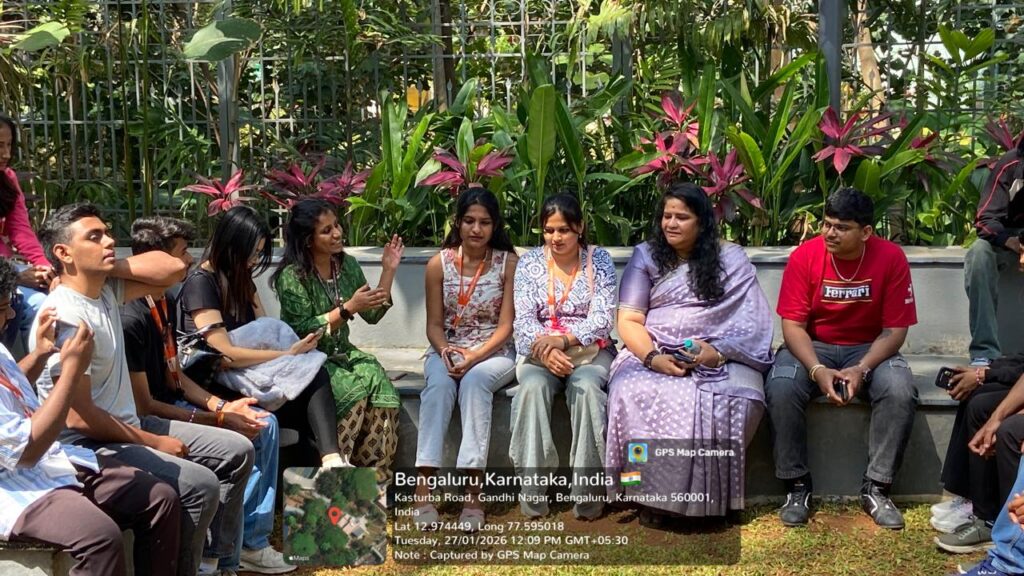
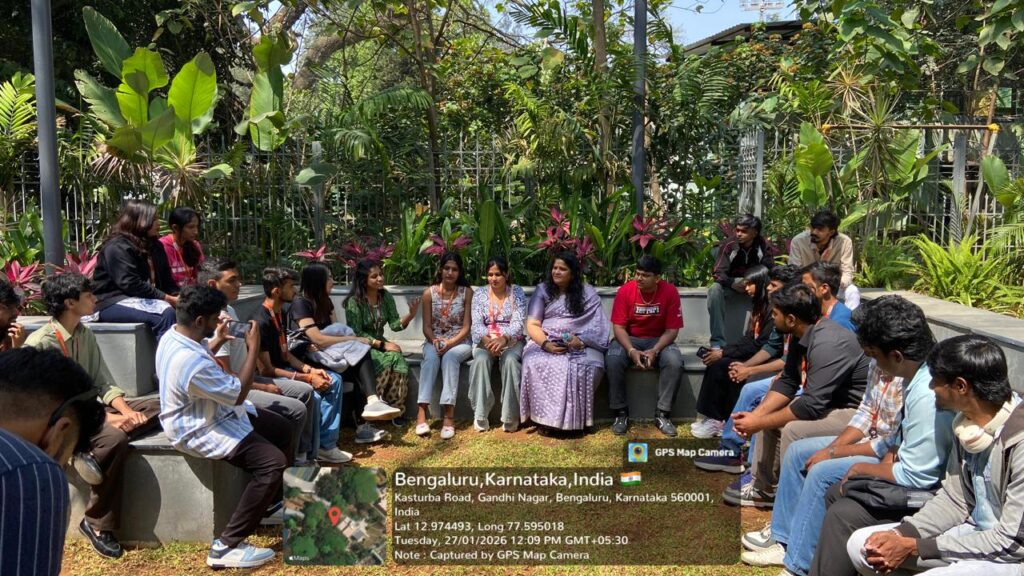
A significant highlight of the visit was an interactive session with Dr. Beena Unnikrishnan, during which students gained firsthand insights into:
• Her artistic journey and research process
• The conceptual evolution of the Ekaa – The One project
• The role of art in storytelling, cultural preservation, and spiritual inquiry
The interaction encouraged students to critically reflect on:
• How traditional knowledge systems can inform contemporary creative practice
• The communicative power of visual symbolism
• Art’s role in shaping cultural narratives and personal identity
This engagement enriched students’ understanding of art as both a communicative medium and a socio-cultural text.
The educational visit to Ekaa – The One: The 64 Yoginis provided students with a multidimensional learning experience that bridged art, history, spirituality, media studies, and design thinking. The exhibition demonstrated how ancient cultural philosophies can be reinterpreted through contemporary art to remain relevant, reflective, and transformative.
The visit successfully met its academic objectives by fostering visual literacy, cultural awareness, critical interpretation, and interdisciplinary thinking, making it a valuable component of experiential learning for students.